Tango Orange Cosmos
The clothing industry has one of the largest impacts on the natural world, with a similar sized global ecological footprint as global food production. Dyes are a part of this—synthetic chemical dyes are largely petroleum-based and pollute water, soil, and air where they are produced and used. Natural dyes offer an alternative, and exploring the colors is a rich process of relationship building. This year, we began offering natural dye and botanical printing classes where participants use cultivated and wild plants to create colorful textiles. One of the standout dye plants we grew at our western Colorado campus was our orange cosmos!
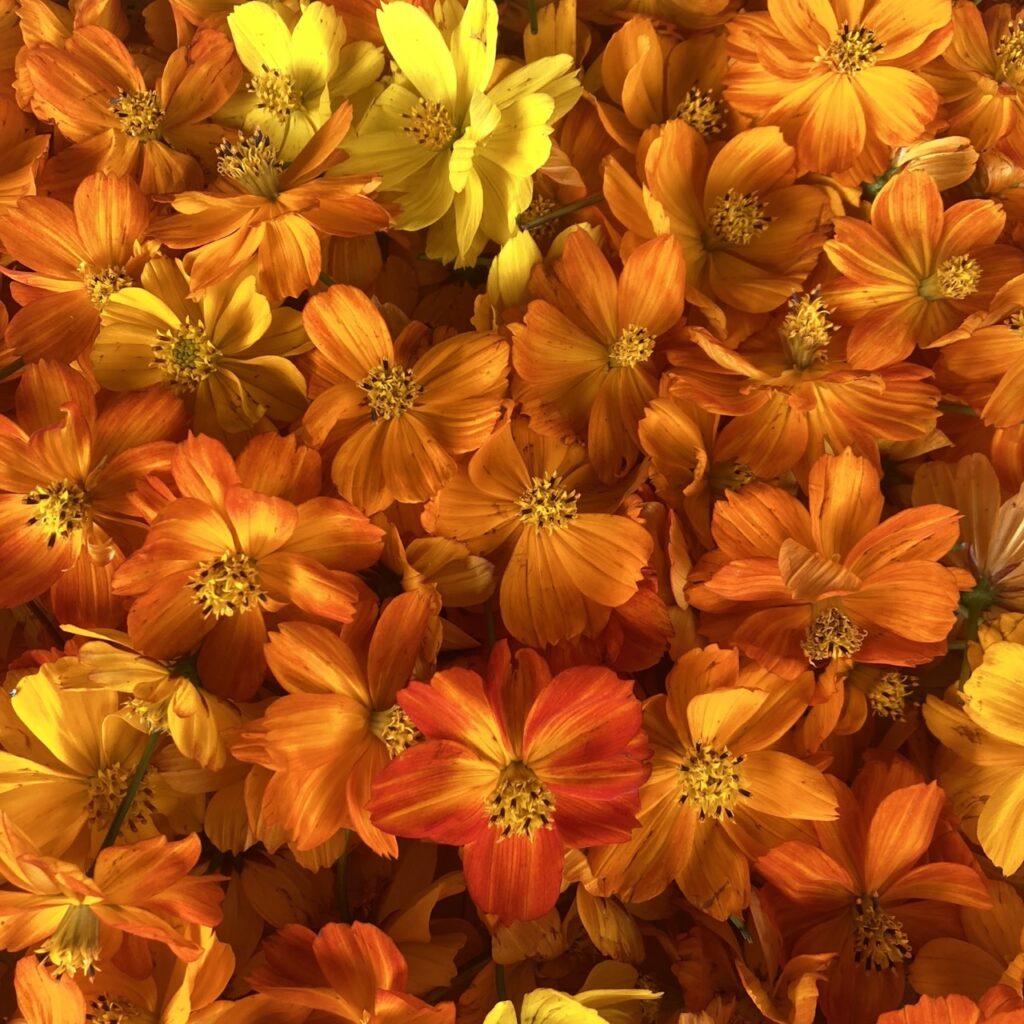
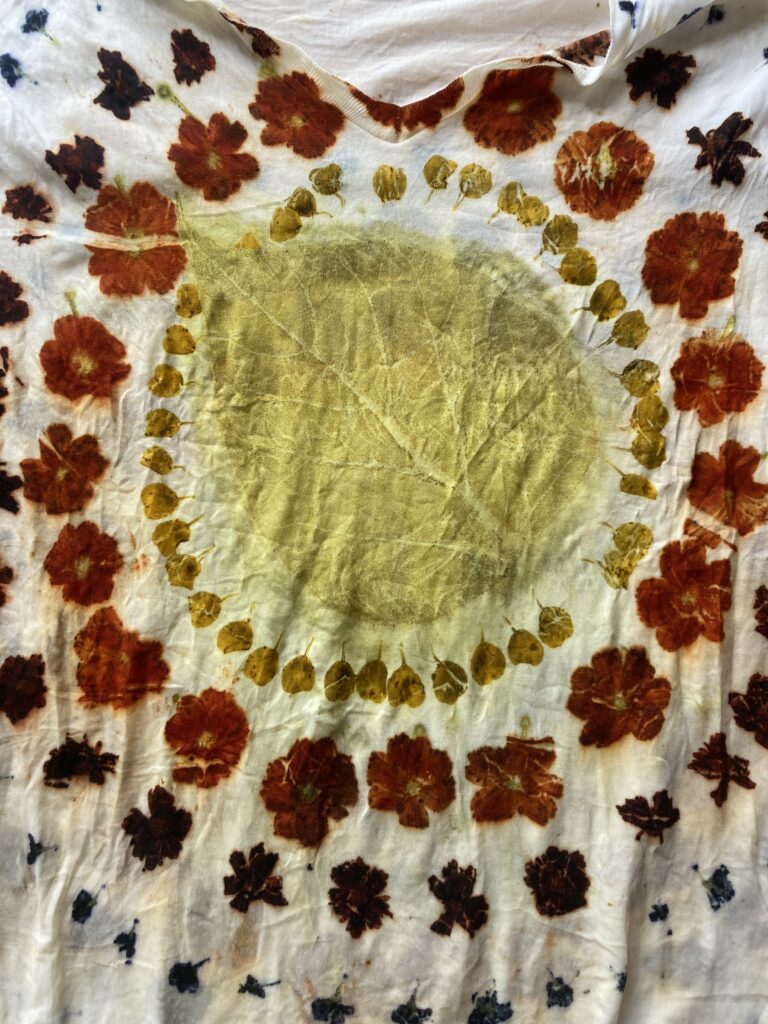
Cosmos are some of the easiest flowers to grow in your garden, and they will readily self-seed. Plant them at any time in the spring and they’ll soon be 6-foot-tall plants dripping in flowers. While cosmos most commonly come in pink and white and purple, this population of orange cosmos were show stoppers! The blossoms ranged from yellow to a deep orange-red. In our botanical printing, the cosmos made vivid flower impressions, with individual petals visible on the cloth. The stems dyed fabric a bright lime green. Even for would-be dyers who don[t have a green thumb, these cosmos are nearly foolproof. Our seeds will be available from High Desert Seed in 2026.
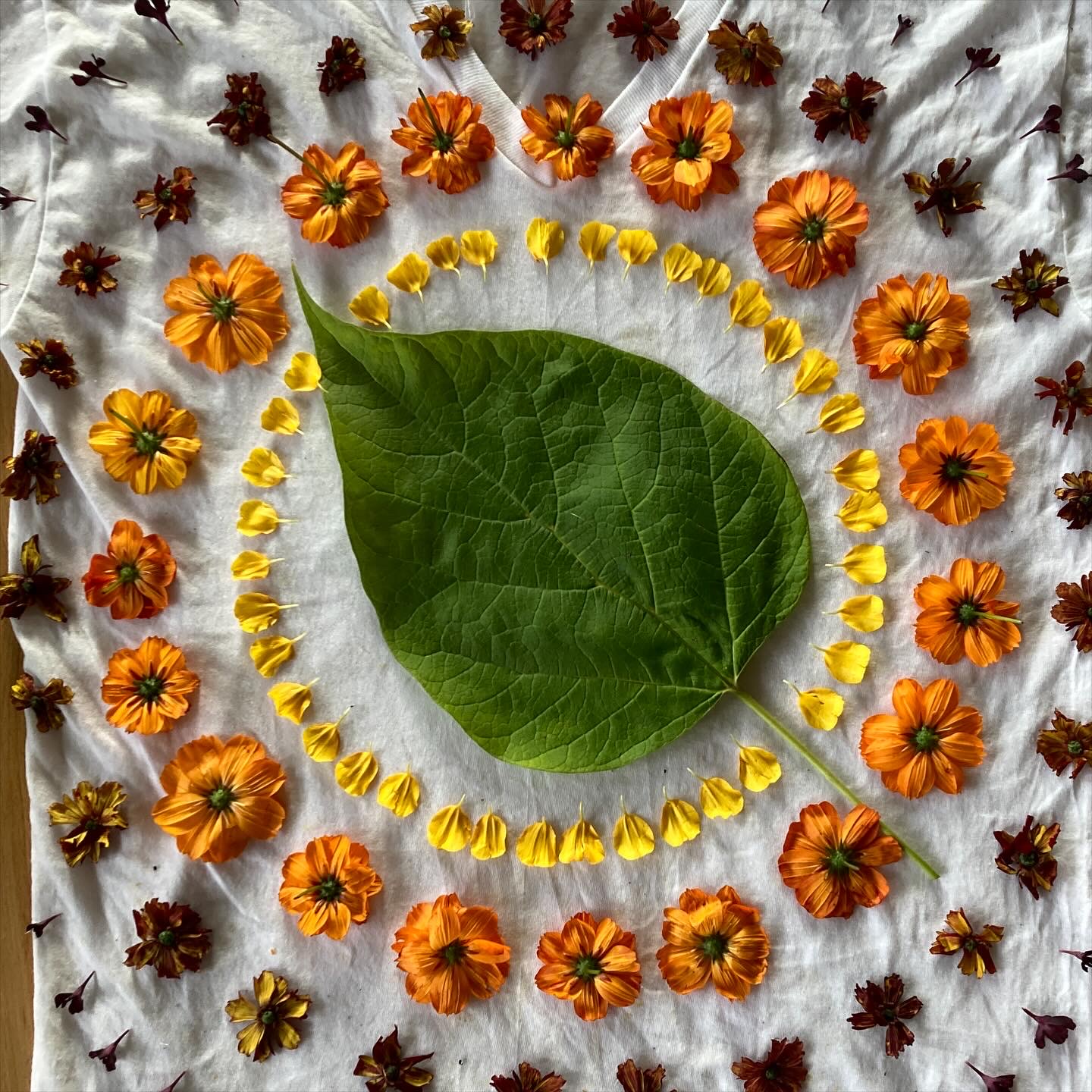
Other plants pictured on the shirt are (from center out): catalpa leaf, marigold petal, cosmos flowers, coriopsis flowers, and black knight scabiosa flowers.
Some resources that focus on the textile and dye industry’s evolution, impact on the world, and pathways forward:
- Worn: A People’s History of Clothing by Sofi Thanhauser
- Fibershed: Growing a Movement of Farmers, Fashion Activists, and Makers for a New Textile Economy by Rebecca Burgess