Humanity’s future is less industrial.
At Groundwork, we believe that a livable and just future must be a less industrial future. For that future to happen, people of all backgrounds need to begin exploring what it looks like to live outside of systems that rely on industrialism, capitalism, and consumerism. The Groundwork Folk School is a step towards that future, teaching skills that pre-date industrial culture and creating spaces of joy, wonder, creativity, and hope for a beautiful future. Groundwork Folk School’s mission is to facilitate the preservation and teaching of traditional and non-industrial skills, crafts, and lifeways.
Willow Basketry

Willow is a fun traditional weaving material that grows across the Northern Hemisphere. Groundwork’s basketry classes teach the foundations of northern European weaving styles, from harvest to finished basket.
Hide Tanning
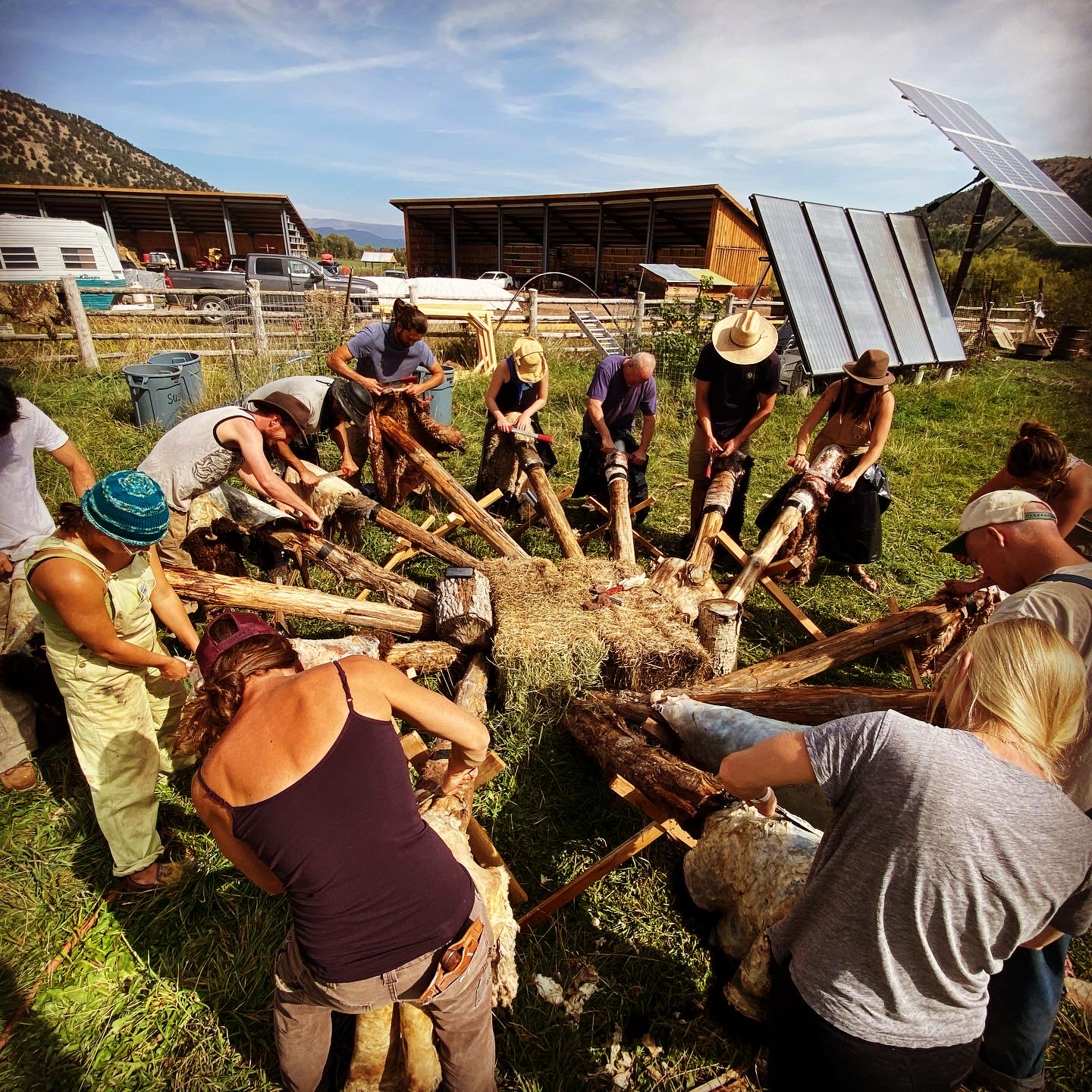
Animal hides are often seen as a waste product from meat production. Groundwork’s hide tanning classes take you through the processes of natural tanning, producing finished leather and sheepskin rugs.
Fiber Arts
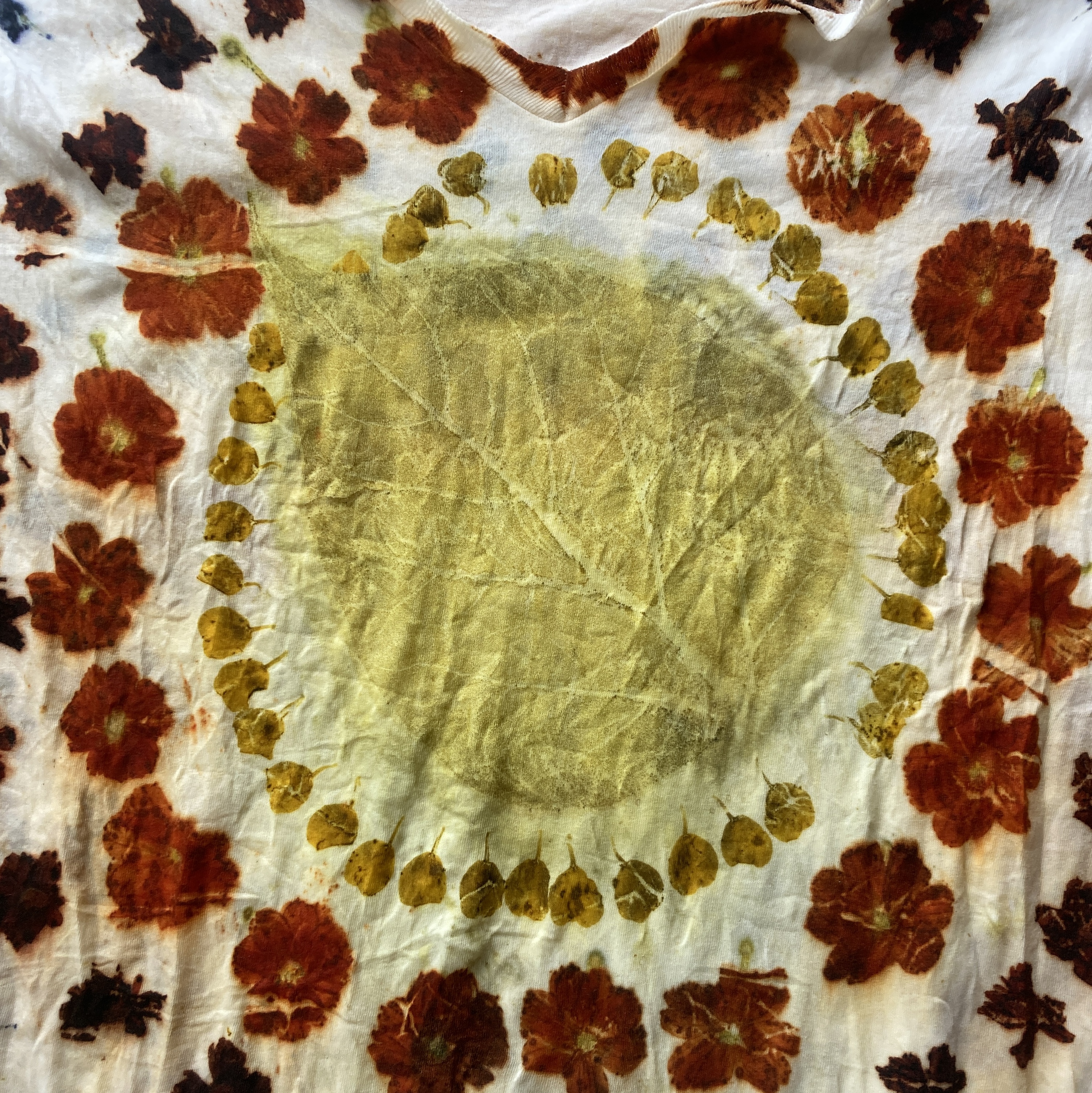
From wool processing to spinning yarn, from natural dyes to felting, our fiber arts classes offer an alternative to the industrial textile industry.
Woodworking & Carving
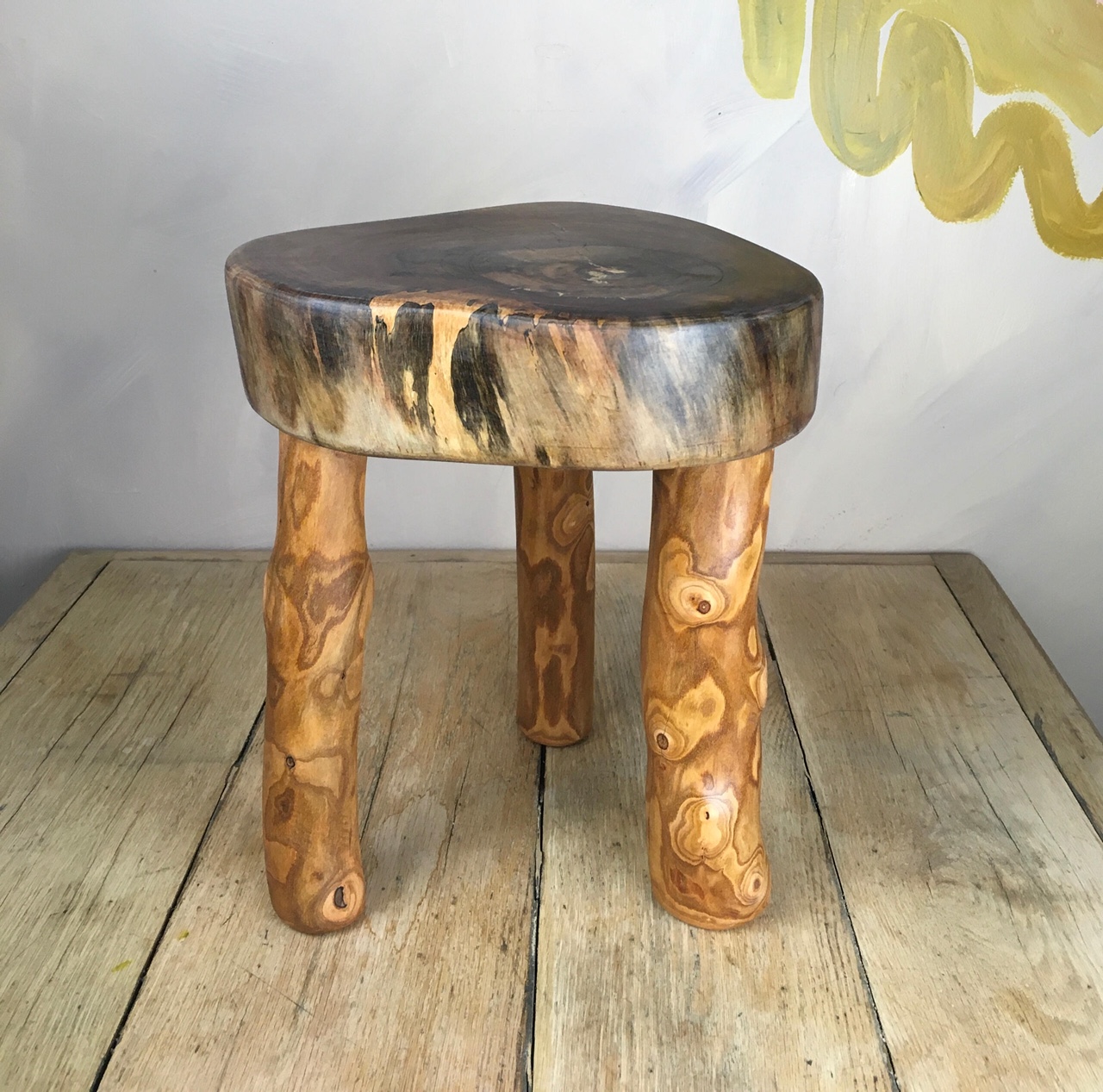
Learn to work with local woods, designing your furniture and eating utensils around the shape of the wood and the wood grain rather than around dimensional lumber like 2x4s.
Longer Workshops
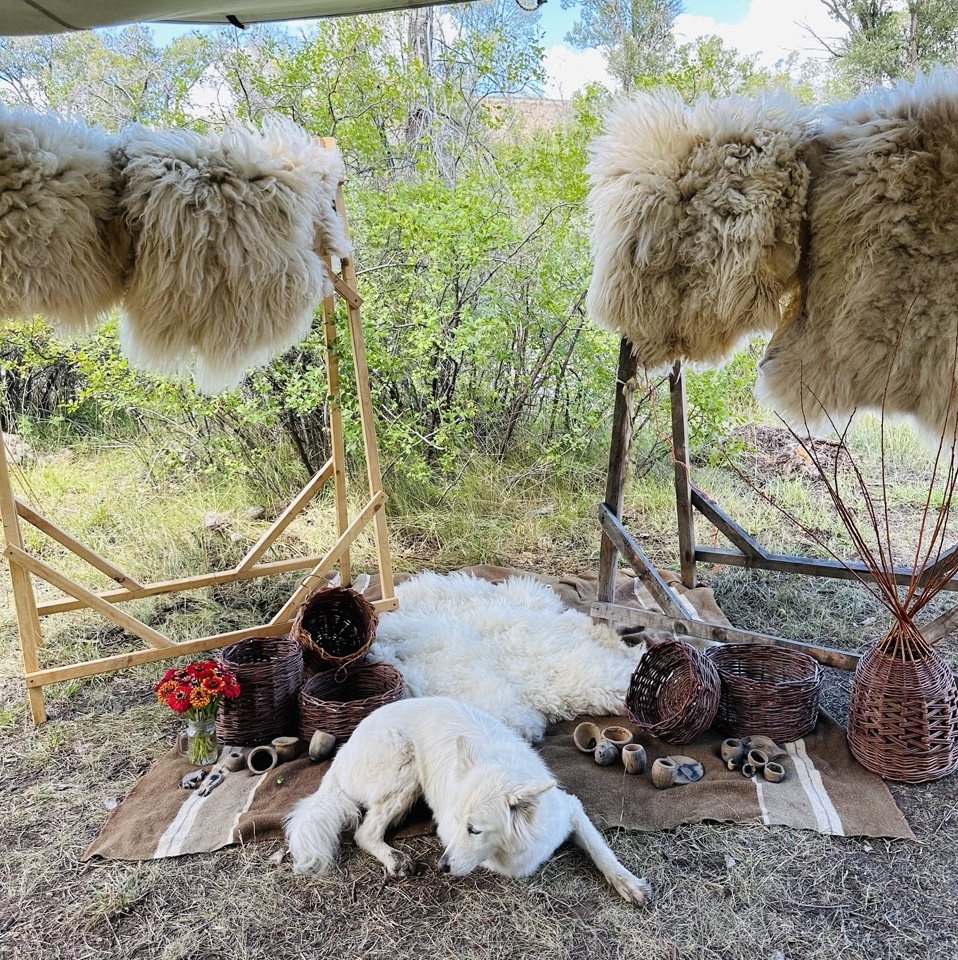
Groundwork offers longer classes from two to seven days in length. Some of these combine multiple skills, while others are intensives in a single skill.
Custom Workshops – Same Tuition
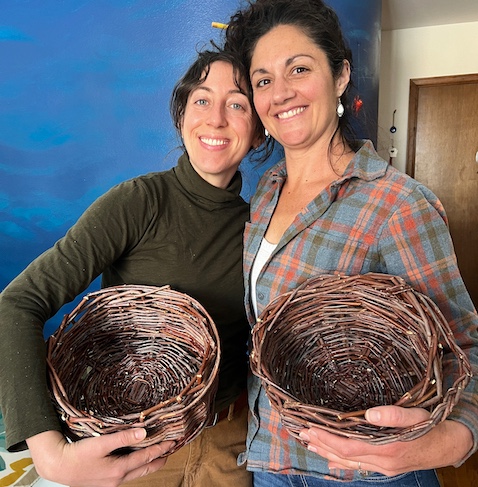
Design your own workshop with Groundwork’s teachers! For private classes, tuition levels can be comparable to public offerings, since we don’t need to advertise or rent venues.
Current Folk School Schedule
| Dates | Location | Teacher(s) | Class | Register |
|---|---|---|---|---|
| September 24–27, 2026 | Paonia, CO | Jeff Wagner | Pack Baskets: A 4-Day Willow Intensive | More Info & Registration |
| September 26, 2026 | Paonia, CO | Wild The Woodworker | Intro To Natural Woodworking | More Info & Registration |
| September 27, 2026 | Paonia, CO | Emily Knickerbocker | Intro To Pine Needle Basketry | More Info & Registration |
| October 17, 2026 | Boulder, CO | Jeff Wagner | Intro To Willow Weaving | More Info & Registration |
| November 21–22, 2026 | Boulder, CO | Jeff Wagner | Willow Basketry Foundations Weekend | More Info & Registration |
| November 27, 2026 | Longmont, CO | Jeff Wagner | Intro To Willow Weaving | More Info & Registration |
| January 1–2, 2027 | Denver, CO | Jeff Wagner | Willow Basketry Foundations Weekend | More Info & Registration |
Notes on Cultural Appropriation
For the past decades, pre-industrial skills have been taught amongst North America’s non-indigenous communities at skill share gatherings called “ancestral skills gatherings,” “primitive skills gatherings” or “Earth skills gatherings.” Each of the gatherings is unique, and each is run with varying degrees of consideration for cultural appropriation. At best, these gatherings are wonderful communal spaces where people from all walks of life come together joyfully to explore the skills that humanity relied on until the past one or two centuries. Unfortunately, at their worst, they can be appropriative and exclusionary—one of Groundwork’s past instructors described some gatherings as “Native American cosplay.”
We recognize that the study and teaching of ancestral and traditional skills can appropriate indigenous cultures. People with privilege can freely learn skills that were violently suppressed during genocide and assimilation processes. We believe that it’s possible to explore, study, and practice ancestral and traditional skills in respectful ways. How do we do this? In this essay, Jeff Wagner, our executive director, outlines a non-appropriative ethos for the Groundwork Folk School.
Read Groundwork’s Stance On Cultural Appropriation
Meet The Folk School Teachers
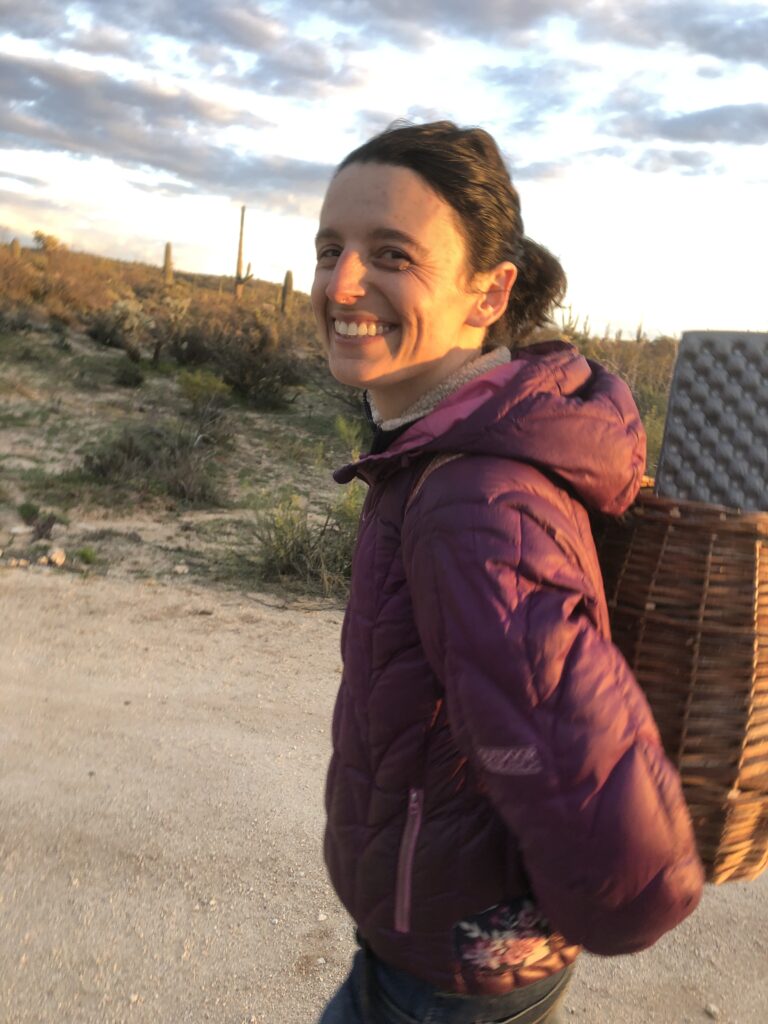
Jenna Bradford
Jenna grew up in the Sacramento River delta in California, swimming, climbing trees, searching for animals along the water’s edge, studying their ways, and always looking for excuses to be outside. She received her B.A. in Environmental Studies and Bioethics from Loyola University in Chicago. Before becoming a teacher, Jenna worked on farms in Colorado, designed and sewed clothing, and studyied plants through an herbalism apprenticeship with Wildroot Botanicals and an ethnobotany immersion with Raven’s Roots Naturalist School. Jenna taught 5th and 6th grade at Paonia’s North Fork School of Integrated Studies. She is excited to continue with some of her current students on this adventure. Jenna loves teaching because she loves learning and loves to share that enthusiasm with others.
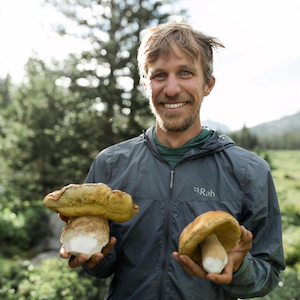
Jeff Wagner
After a university education didn’t provide sufficient answers, Jeff began seeking answers to the big questions that weren’t answered by academia: how we might reimagine U.S. society in the age of climate change, and what it means to be a responsible human in an unraveling world. For over a decade, Jeff sought answers outside the mainstream: living at wolf sanctuary in the Colorado mountains, leading NOLS expeditions across North America, and facilitating cross-cultural semesters in the Andes, the Amazon, the Himalaya, and the great Mekong River Basin. Jeff’s biggest focus has been teaching to the cultural roots of environmental issues, and helping students both experience and examine different ways of life that can be applied as cultural activism at home in North America. As a person dedicated to questioning the mindsets stemming from settler-colonialism, Jeff finds inspiration in the communities working to maintain and strengthen relationships with the natural world and with the sources of food, water, clothing, shelter, and meaning. Jeff likes walking slowly, weaving fabric and baskets, and growing beautiful varieties of heirloom seeds. Jeff founded Groundwork to help people pursue the goal of becoming ancestors that their descendants will be proud to tell stories about. Jeff is a certified Wilderness First Responder.
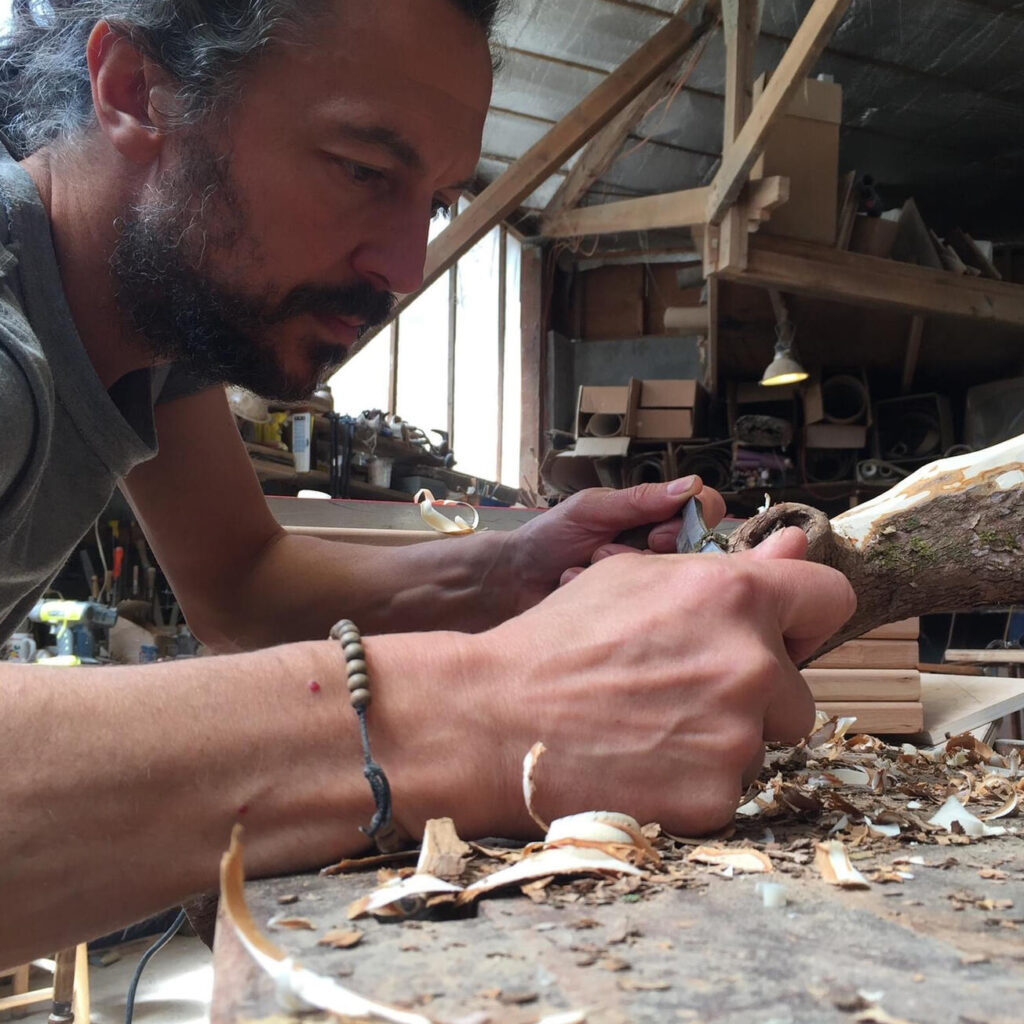
Wild The Woodworker
Wild is a woodworking artisan creating custom-made tree furniture with reclaimed materials and local hardwoods. Wild left a career as a wildlife biologist to pursue woodworking, and has developed his craft to rely as little as possible on the timber industry, opting instead to use discarded orchard wood, fallen trees, and other reclaimed materials to create his beautiful furniture. You can see a gallery of his work on his website, Menagerie Woodworking.
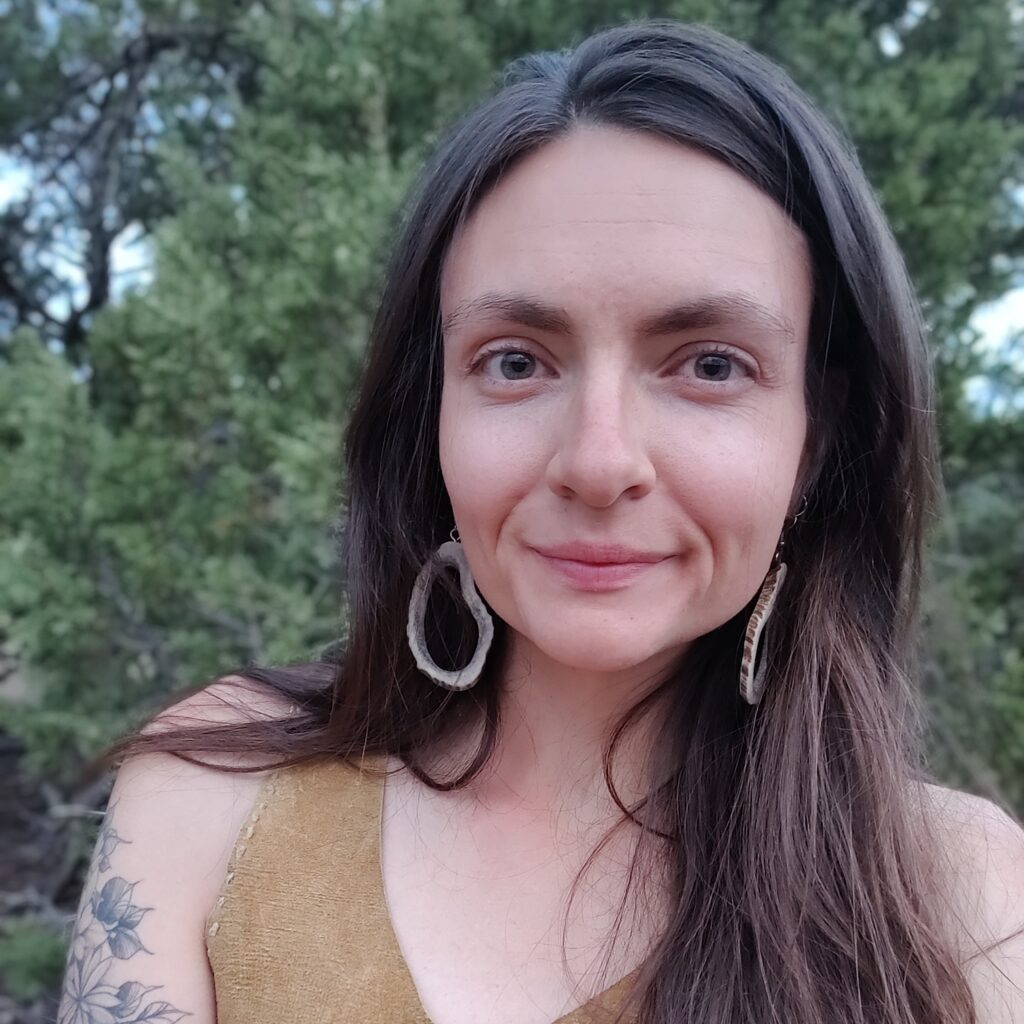
Emily Knickerbocker
Emily is a creator and educator based on Colorado’s Western Slope, where she draws inspiration from the mountains, valleys, and high desert landscapes around her. Growing up among the red rock canyons and towering mountains of the Southwest, she developed an early love for wandering, observing, and learning from the natural world. Her craft practice centers on natural materials, explored through traditional processes such as pine needle basketry, wild clay pottery, and jewelry making. She explores how making can bring us into a deeper relationship with place and remind us that we are woven into a larger ecological community. Through creation and education, she hopes to cultivate curiosity, connection, and care for the land. With a background in art education, Emily has taught in a variety of settings and loves creating hands-on experiences that invite people to explore the natural world through a creative lens.
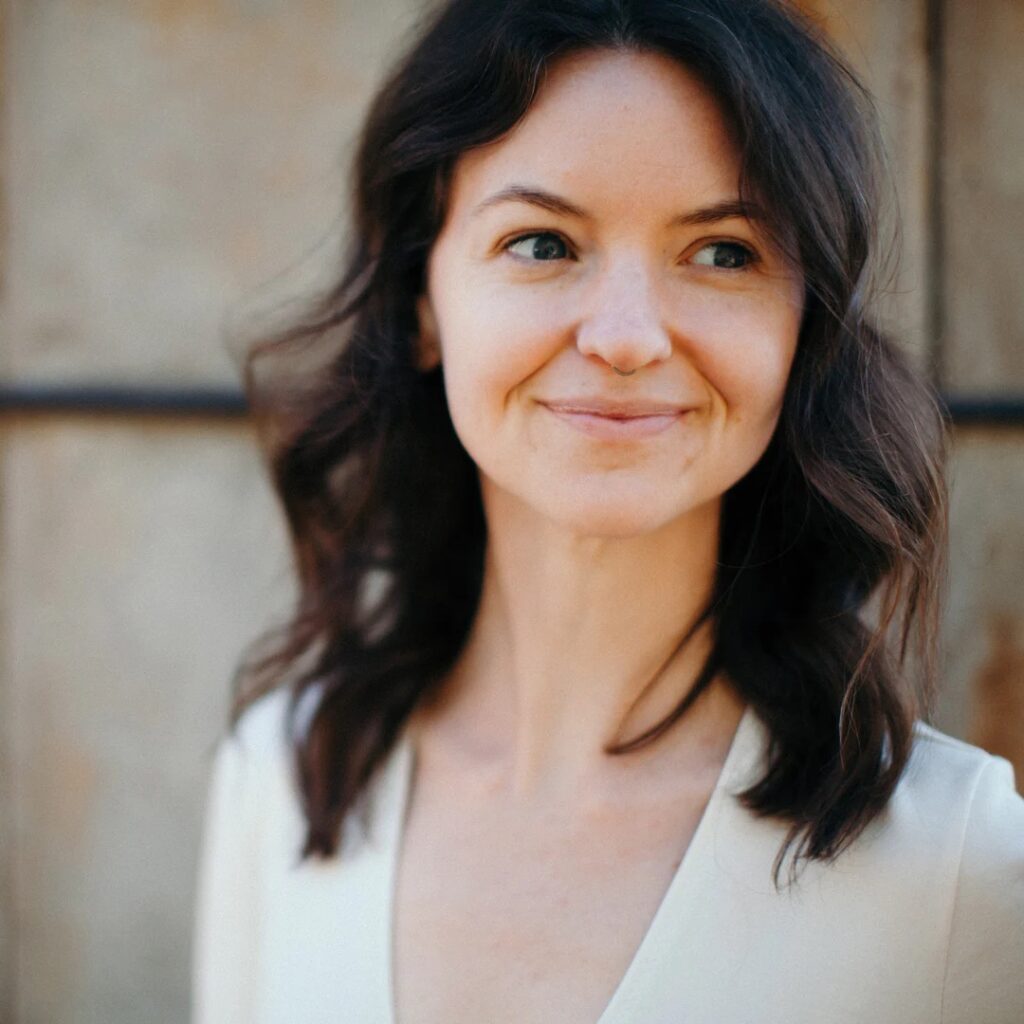
Allie Olson
Craft has been a constant for most of Allie’s life. Her mom taught her to sew when she was seven and the craft has grown into a passion that encompasses creativity, body positivity, and care for the planet. Allie creates pine needle baskets, weaves, sews, and uses plants to naturally dye cloth and fiber. Allie spent many years working with sewing pattern design. She co-founded Indiesew (a marketplace for indie sewing patterns) in 2013, and managed that company until late 2019. Allie also sells her own pattern line online here. Beyond being a crafter, weaver, dyer, and sewist, Allie is a passionate warrior for Earth. Most of her time outside of her studio is spent outdoors gardening, trail running, or skiing.
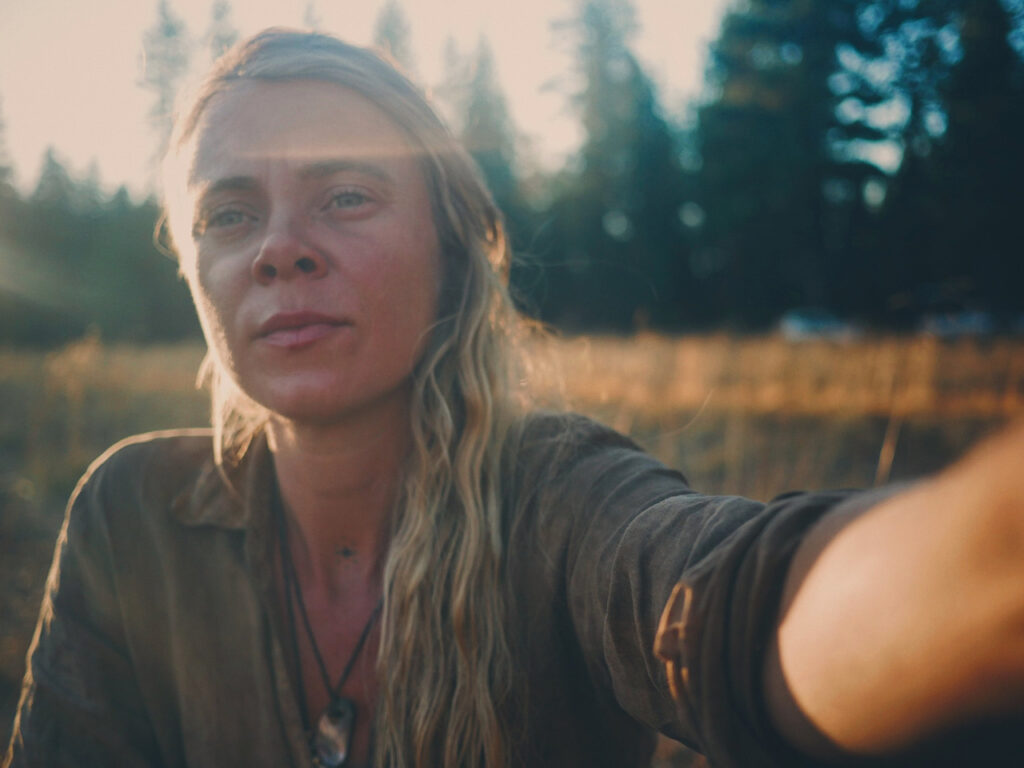
Kelly Moody
Kelly grew up in rural southern Virginia in tobacco country, working at her family’s nursery business. She earned a B.A. in Philosophy and Religious Studies, Anthropology at Christopher Newport University in Virginia in 2009, focusing on globalization of culture and land relationships, environmental ethics and ‘east-west’ comparative philosophies. After that she worked on and ran organic farms, studied with various herbalists, gardeners, permaculturists and ecologists from Vermont to Ohio, North Carolina, California, New Mexico and beyond. She has also spent countless hours in self-study working with plants on public land across the U.S. west. She is the main facilitator behind the Ground Shots Project and Podcast, a work that explores cross-ecological and societal intersections. Kelly is a certified Wilderness First Responder.